According to CSIRO data, 1 in every 3 homes in Queensland will experience termite activity at some point in its life cycle. On the Gold Coast, our sub-tropical warmth, coastal humidity, and lush perimeter foliage make the area an absolute haven for aggressive subterranean termite species, notably Coptotermes acinaciformis and Schedorhinotermes intermedius.
What catches most homebuyers completely off-guard is this reality: standard Australian home insurance policies explicitly exclude termite damage. If you buy a property with an active infestation or historic structural hollow-out, you will foot the entire rectification bill out of your own pocket.
Why Termites Are Such a Concealed Threat
Subterranean termites require continuous humidity to survive. To avoid sunlight and air currents that would desiccate their soft bodies, they travel strictly underground or inside earthen mud shelter tubes. When they penetrate a home’s wall framing, they consume timber from the inside out, always leaving an ultra-thin outer veneer of wood or paint intact.
A timber framing stud or roof truss can appear 100% sound to an inexperienced eye while being completely hollowed out inside. Below are the 6 early warning signs every Gold Coast buyer should look for.
1. Mud Shelter Tubes Along Subfloor Brickwork & Slab Edges
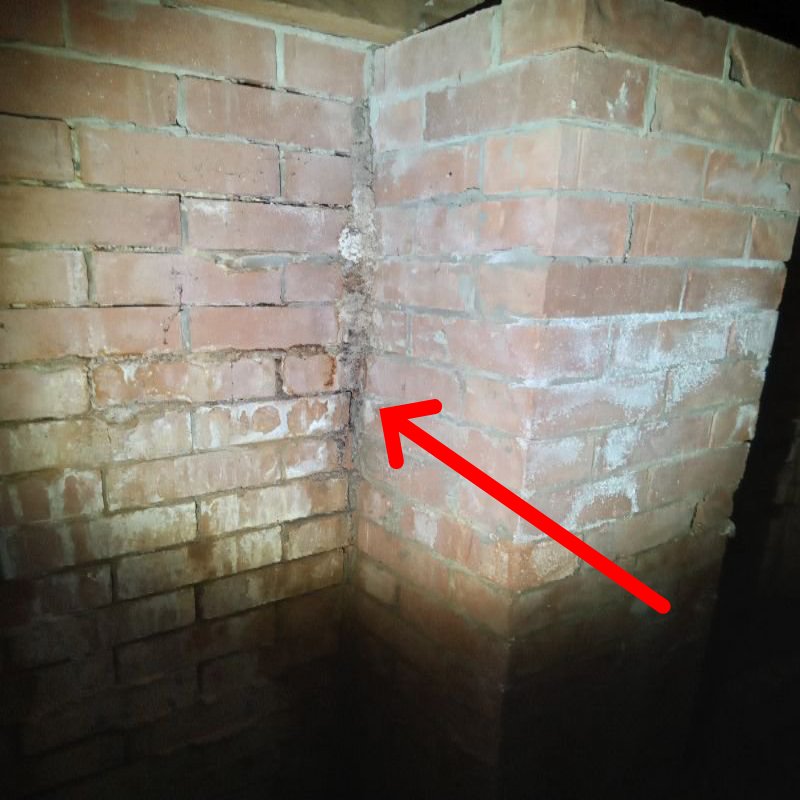
Termites construct brown, fibrous mud trails (often the thickness of a pencil) to bridge concrete slabs, subfloor piers, and plumbing penetrations. These mud tubes are an unmistakable sign that termites are actively foraging between their underground colony and the home's structural framing.
2. Hollow Sounding Architraves & Skirting Boards
When an expert pest inspector conducts a dedicated Timber Pest Inspection, every accessible internal timber is physically sounded with a specialised acoustic donger. Solid timber produces a clean, sharp resonant tone. Timbers compromised by termites produce a distinct dull, hollow thud.
Queensland Termite Fact
A mature subterranean termite colony can contain over 1,000,000 hungry workers and consume the structural load-bearing timber equivalent of an entire door frame every single week.
3. Suddenly Sticking Doors & Jammed Windows
While seasonal humidity can cause timber doors to swell slightly, sudden jamming or binding in door frames is frequently caused by termites eating away the internal studwork, causing the surrounding frame to warp under the structural weight of the ceiling joists.
4. Papery Veneers & Fine Wood Frass
If you gently press against a suspected window sill or skirting board and your thumb breaks through into empty space, the wood has been reduced to a wafer-thin paper shell. In some cases, fine sawdust-like granules (frass) may appear in small mounds near baseboards.
5. Discarded Swarmer Wings on Window Sills
During warm, humid spring and summer evenings on the Gold Coast, reproductive winged termites (alates) take flight from mature colonies to mate and establish new nests. Finding dozens of discarded silvery wings caught on window tracks or spider webs inside a home is a serious red flag that an active colony is either inside or immediately adjacent to the structure.
6. Spongy, Springy, or Sagging Timber Flooring
When termites feed on structural subfloor bearers and joists, the timber loses its compressive load-bearing capability. Walking across the room may reveal soft, springy spots or subtle sagging along floorboard seams.
Visual Inspection vs. Forensic Diagnostic Tools
A general real estate visual walk-through cannot see through plasterboard or under tiles. That is why professional inspections under AS 4349.3 employ multi-layered testing:
- Calibrated Electronic Moisture Meters: Detect elevated humidity pockets behind walls generated by termite respiration and mud packing.
- Acoustic Timber Sounding: Tests the core density of all structural door jambs, window reveals, and skirting boards.
- Physical Roof & Subfloor Cavity Crawls: Crawling into tight roof voids and subfloor crawlspaces where termite tracks actually begin.
Concerned About Termites On A Property You're Buying?
Get 2 separate independent reports (Building Structural by Garry + Timber Pest by our licensed pest technician) delivered the same evening with high-resolution photos.